

Calypso Icon Mighty Sparrow Dies at 91, Leaving a Monumental Caribbean Legacy
Mighty Sparrow, born Slinger Francisco, has died at 91 after a legendary career spanning decades. The Grenada-born, Trinidad-raised performer helped take calypso to international audiences and became one of the Caribbean’s most influential musical figures.
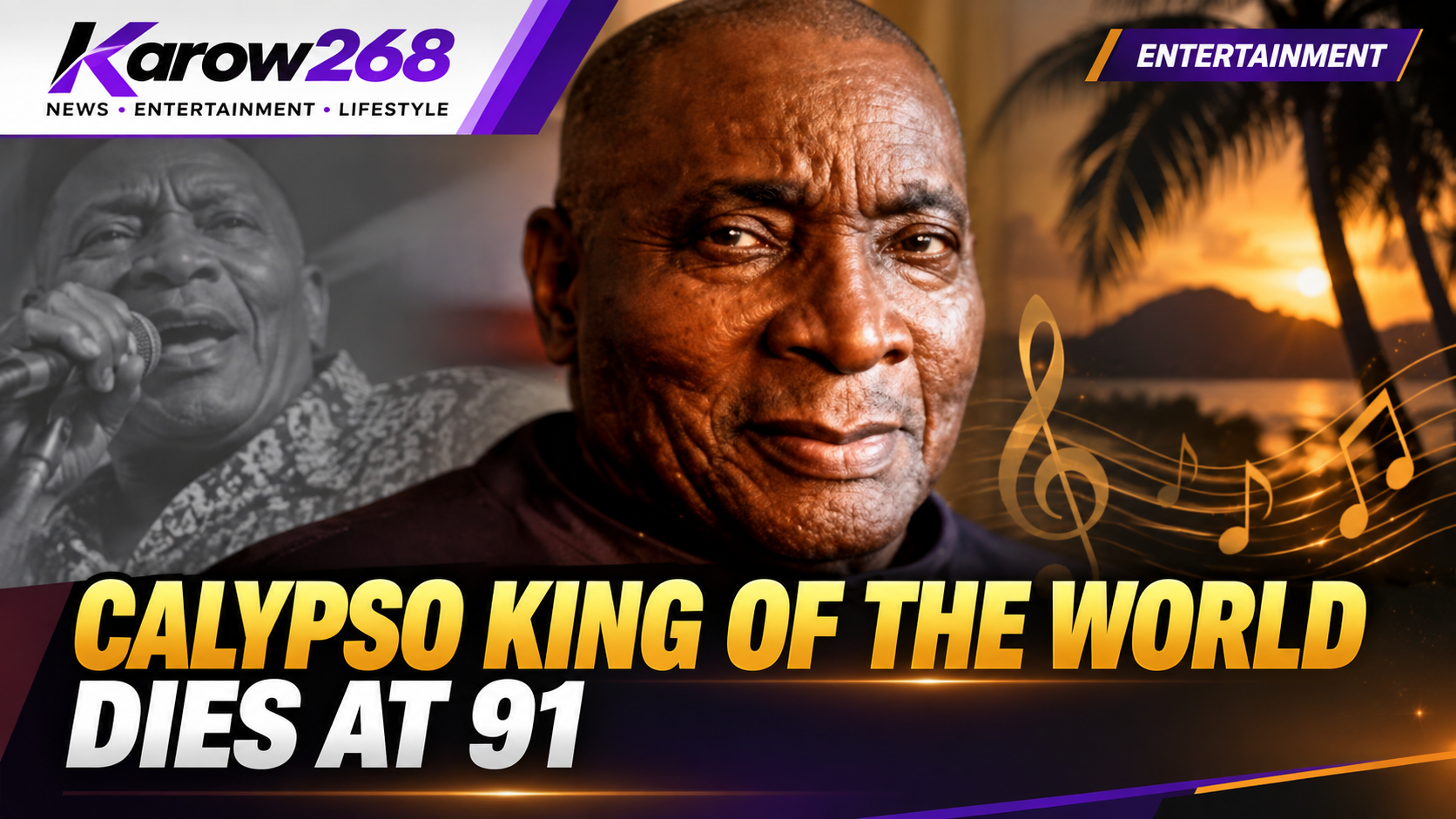
The Caribbean has lost one of its most celebrated musical figures with the death of Slinger Francisco, better known around the world as the Mighty Sparrow, at the age of 91. Affectionately called the “Calypso King of the World,” Sparrow spent decades helping transform calypso from a Caribbean musical tradition into an art form enjoyed by audiences around the globe. Born on July 9, 1935, in Grand Roy, Grenada, Francisco moved to Trinidad with his family as a young child. His early exposure to music included singing in the choir at St. Patrick’s Catholic Church, where he eventually became head choirboy. As he grew older, his attention increasingly turned to calypso. His energetic movements while performing reportedly helped earn him the nickname “Little Sparrow,” which eventually developed into the stage name that would become famous throughout the Caribbean — the Mighty Sparrow. His major breakthrough came in 1956 with “Jean and Dinah,” one of the recordings that would come to define his career. The song helped propel Sparrow to national prominence and earned him his first Road March and Calypso Monarch victories. Over the course of his career, Sparrow went on to win Trinidad and Tobago’s Road March competition eight times and the Calypso Monarch title eight times, establishing himself as one of the most successful performers in the history of the art form. But Sparrow’s influence extended well beyond Carnival competitions. Through humour, satire, storytelling and social commentary, his music documented different aspects of Caribbean society. His songs explored relationships and everyday life while also addressing politics, colonialism, race, history and social issues affecting people throughout the region. Recordings such as “Jean and Dinah,” “Obeah Wedding,” “Congo Man” and “The Slave” became some of the most recognizable songs in his extensive catalogue. During a career spanning several decades, Sparrow wrote hundreds of songs and recorded numerous albums, building a body of work that reached audiences throughout the Caribbean and internationally. He was also willing to experiment beyond traditional calypso, incorporating elements of jazz, pop, soca and other musical styles into his work. His recording of “Only A Fool Breaks His Own Heart” also gained international attention and helped introduce his music to audiences outside the Caribbean. Sparrow’s contribution to Caribbean music and culture earned him numerous honours during his lifetime. The University of the West Indies awarded him an honorary Doctor of Letters in 1987, while he received the Order of the Caribbean Community in 2001. He was later recognized with a Lifetime Achievement Award from the Government of Trinidad and Tobago and was appointed an Officer of the Order of the British Empire. Even in his later years, Sparrow remained closely associated with the development and international recognition of calypso. His influence extended across generations of performers who followed him, while his extensive catalogue continued to introduce new listeners to the music and stories of the Caribbean. For many across the region, Mighty Sparrow was more than an entertainer. His songs became musical snapshots of Caribbean life, capturing its humour, celebrations, struggles, politics and history. The death of the “Calypso King of the World” marks the end of an extraordinary chapter in Caribbean music, but the songs and cultural legacy Slinger Francisco created over his long career will continue to be heard for generations.
Reader comments
Share your thoughts. Comments appear after approval. No account or email required.